 Angola
 Benin
Benin Burundi
 DR Congo
 Guinea Bissau
 Liberia
 Niger
Niger Togo
TogoCargo shipped from Germany with the Republic of Congo as its final destination requires a validated Republic of Congo ECTN. The requirement applies to cargo generally. It is not limited to machinery, vehicles, project freight or another specific type of goods.
The shipper or freight forwarder should arrange the ECTN for the consignee before the deadline. For Republic of Congo shipments, validation must be completed within five days of the vessel sailing. A missing certificate can leave the importer dealing with a customs hold, storage charges and clearance delays at the destination.
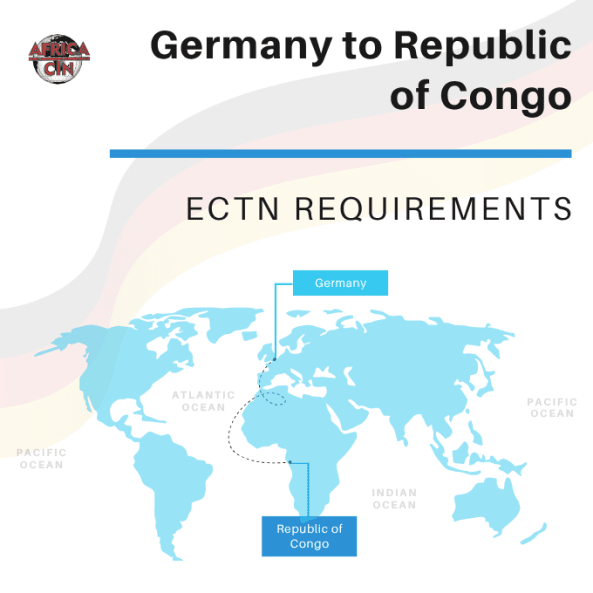
When Cargo from Germany Requires an ECTN
The Republic of Congo ECTN, sometimes called a BESC or cargo tracking note, is required when the cargo’s final destination is the Republic of Congo.
The loading port does not remove this requirement. A shipment leaving Hamburg, Bremerhaven or another German port still needs the certificate when the goods are ultimately being imported into the Republic of Congo.
Check the final destination carefully when planning the application. The Republic of Congo and the Democratic Republic of the Congo are different destinations with different cargo certificate systems. Republic of Congo shipments use the ECTN, while DR Congo shipments normally require a FERI.
The country name, consignee address and destination shown across the shipping documents should make the correct destination clear.
Documents German Exporters Should Send
You need four main documents to complete the Republic of Congo ECTN:
- Bill of Lading: Send the latest available copy from the carrier or freight forwarder. The cargo description, shipper, consignee, vessel, ports, containers and weight must be accurate.
- Commercial Invoice: This should show the parties, goods, quantities and commercial value. The description should agree with the bill of lading.
- Freight Invoice: Send the carrier or freight forwarder’s invoice showing the ocean freight amount. A separate freight invoice is not required when the freight value is already shown on the commercial invoice.
- Export Declaration: This is normally prepared as part of the German export customs process. Check that the cargo details agree with the invoice and bill of lading.
The complete AfricaCTN document glossary explains the purpose of the main documents used in a CTN application.
You do not have to wait for every document before making contact. AfricaCTN can prepare the initial draft using the bill of lading, but the remaining documents must be supplied before the Republic of Congo ECTN can be completed and validated.
Check These Details Before Approving the Draft
Document mismatches are a common reason an application gets held up. The ECTN is prepared from the information supplied by the exporter and freight forwarder, so changes should be identified while the certificate is still in draft form.
Check the following points carefully:
- Shipper and consignee: Names and addresses should be written consistently across the bill of lading and commercial invoice.
- Cargo description: Avoid vague wording when the shipping documents contain a more complete description.
- Quantity and packaging: Package counts, container details and quantities should agree.
- Weight: Check that gross weight figures are consistent across the available documents.
- Commercial value: The value entered on the ECTN should match the commercial invoice.
- Freight value: Confirm that the ocean freight amount comes from the freight invoice or is clearly shown on the commercial invoice.
- Vessel and voyage: Use the latest booking or bill of lading information, especially if the carrier has changed the sailing details.
- Loading and discharge ports: The route shown on the draft should follow the actual shipment.
Do not approve a draft just because the vessel has sailed and the deadline is getting close. Point out incorrect information first. Approval confirms that the shipment details are ready to be submitted for final validation.
How the Republic of Congo ECTN Process Works
The application follows five main steps:
- Submit Documents: Send the bill of lading, commercial invoice, freight invoice and export declaration to AfricaCTN.
- Receive the Draft and Invoice: AfricaCTN reviews the documents and prepares the draft Republic of Congo ECTN and service invoice.
- Approve the Draft: Check the draft against the shipping documents. Request any necessary corrections before approval.
- Complete Payment: Pay the invoice so the certificate can move to final validation.
- Receive the Validated ECTN: The final electronic certificate is delivered by email. No hard copy is required.
Sending the documents does not mean the shipment has already been validated. Draft approval and payment must be completed before AfricaCTN can submit the ECTN for final validation.
Republic of Congo ECTN Deadline
The Republic of Congo ECTN must be validated within five days of the vessel sailing.
AfricaCTN recommends submitting all required documents three to five business days before that deadline. This leaves time to review the cargo details, prepare the draft and correct any discrepancies before final submission.
For a shipment from Germany, start with the bill of lading as soon as it becomes available. Do not wait for the vessel to arrive at the destination or for the importer to report a customs problem.
When the bill of lading is still being updated, send the latest copy and explain which details remain provisional. AfricaCTN can begin the review and tell you what is still needed.
What Happens Without a Validated ECTN?
Cargo arriving in the Republic of Congo without a valid ECTN may not be cleared by customs. The shipment can be held while the importer tries to resolve the missing certificate.
This can result in:
- Customs clearance delays
- Port storage and demurrage charges
- Fines or other penalties
- Additional document checks
- Possible refusal or return of the cargo in serious cases
A reference number, application email or unapproved draft is not the same as a final validated Republic of Congo ECTN. Make sure the completed certificate has been issued and shared with the consignee.
Common Questions
Who should obtain the ECTN?
The exporter, shipper or freight forwarder normally arranges the Republic of Congo ECTN for the consignee’s cargo clearance. The parties should agree on responsibility early, rather than assuming the importer will complete it after arrival.
Can one ECTN cover several shipments?
Each shipment requires its own ECTN number. Separate bills of lading normally require separate applications. Multiple containers moving together under one bill of lading may be covered by one ECTN for that shipment.
Can the application start before the vessel sails?
Yes. Starting before sailing gives you more time to check the draft. AfricaCTN can begin with the bill of lading and request the remaining documents needed for validation.
Need help with cargo leaving Germany? Contact AfricaCTN for your Republic of Congo ECTN.
Found this article helpful? Add AfricaCTN as a preferred source on Google to see more AfricaCTN content in Top Stories, AI Mode and AI Overviews.
