 Angola
 Burundi
 DR Congo
 Guinea Bissau
 Liberia
 Niger
Niger Togo
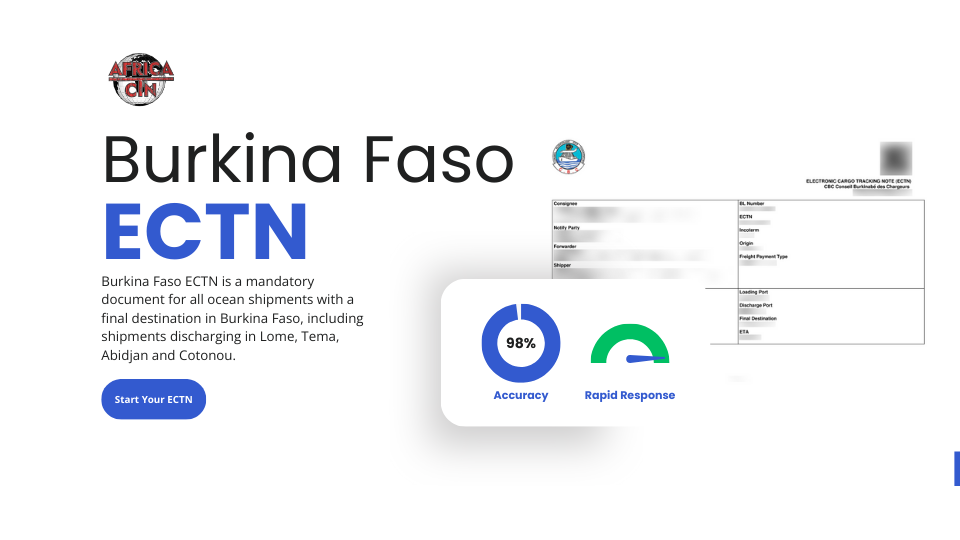
TogoCargo shipped from India to Burkina Faso through the Port of Lomé needs more than one compliance check. The final destination creates a Burkina Faso ECTN requirement, while discharge and transit through Togo also create a Togo ECTN/BESC requirement.
Plan both applications before the vessel reaches Lomé. Treating the cargo as only a Burkina Faso shipment can leave the Togo transit document missing, while arranging only the Togo certificate does not cover the final destination requirement.


Two ECTN Filings Apply to This Route
The two certificates apply for different reasons:
- Burkina Faso ECTN: Required because Burkina Faso is the cargo’s final destination, even though the ocean shipment discharges in another country.
- Togo ECTN/BESC: Required because the cargo discharges in Togo before continuing overland to Burkina Faso.
The shipper or freight forwarder should arrange the filings and provide the validated documents to the importer or consignee. For Indian exporters, it is better to decide who is handling both applications when the freight booking is confirmed.
Make sure the bill of lading does not describe Lomé as the final destination when the goods are actually moving onward to Burkina Faso. The discharge port and final destination are not the same thing on this route.
The complete transit requirement for the discharge country is available on the Togo ECTN requirements page.
Documents to Prepare in India
Start with the core shipping documents used for both applications:
- Bill of Lading: The draft can be used to begin the process, but the final shipment details must be available before validation.
- Commercial Invoice: It should show the buyer, seller, cargo description, value, currency and HS code.
- Freight Invoice: Required when the ocean freight value is not shown on the commercial invoice.
- Export or Customs Declaration: Required for the Togo ECTN and should match the bill of lading and commercial invoice.
Burkina Faso specifically requires the HS code to be shown on the commercial invoice. Do not leave the HS code only on the export declaration or packing list.
The Togo filing also needs close document matching. Check that:
- Shipper, consignee and notify-party addresses agree across the documents.
- The weight on the export declaration matches the bill of lading.
- The statistical value on the declaration matches the commercial invoice.
- The bill of lading shows the tare weight when shipper-owned containers are used.
This is where applications are often held up. The documents may all be available, but one weight, address or value has been entered differently.
Coordinate the ECTN Numbers With the Carrier
Tell the carrier or Indian freight forwarder early that ECTN references will need to be added to the shipping documents.
For the Burkina Faso filing, the ECTN number must appear on the final bill of lading before final validation can be completed. Waiting until the carrier has locked the bill of lading can make this difficult.
Togo also has an important bill of lading step. After the Togo BSC is pre-validated, the original bill of lading must be updated with the certificate number and the final validation completed within the applicable five-day window.
Do not approve a final bill of lading without checking:
- Port of loading in India
- Port of discharge in Lomé
- Final destination in Burkina Faso
- Shipper and consignee details
- Container and seal numbers
- Cargo description, weight and package count
- Required ECTN references
A vessel rollover, container change or revised cargo quantity should also be reported before the certificates are finalized.
Work Back From the Vessel Arrival in Lomé
Both certificates must be validated before the vessel arrives at the discharge port. AfricaCTN requires the complete documents three to five business days before that deadline.
Do not use the expected overland arrival in Burkina Faso as the filing deadline. The important date for the ocean-freight stage is the vessel’s arrival in Lomé.
Send the bill of lading as soon as it is available. AfricaCTN can prepare the initial draft from the BL while the commercial invoice, freight invoice and export declaration are being finalized.
Important: Receiving a draft certificate does not mean the shipment has been validated. Draft approval and payment must be completed before the final documents can be submitted for validation.
How to Arrange Both Applications
The two applications can be managed together, but each draft must be checked against the correct country and route details.
Submit Documents: Send the bill of lading, commercial invoice, freight invoice and Indian export declaration to AfricaCTN.
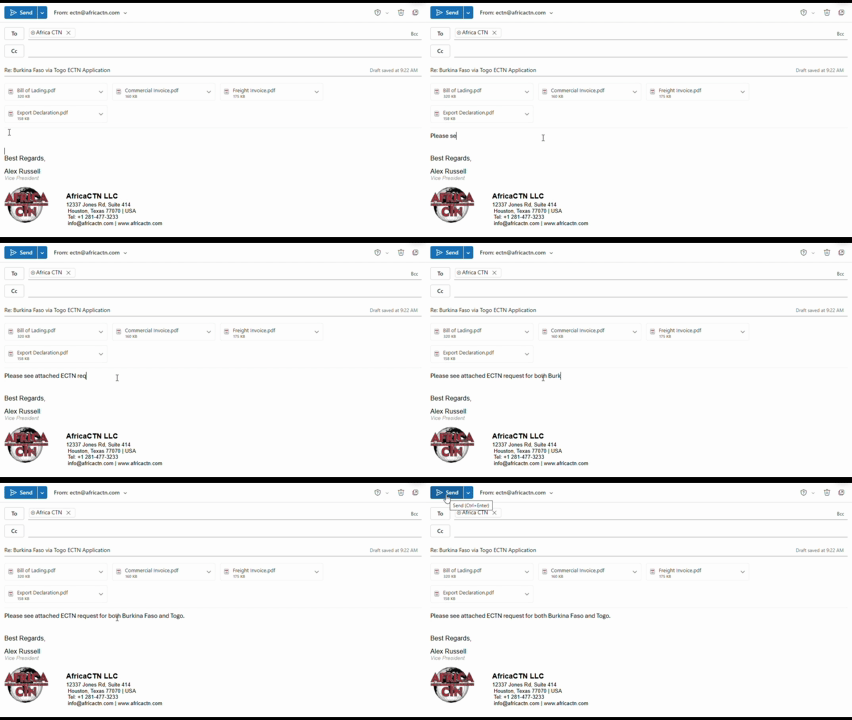
Draft & Invoice: AfricaCTN reviews the route and prepares the applicable Burkina Faso and Togo drafts and invoices.

Check the Drafts: Confirm the loading port, Lomé discharge, Burkina Faso final destination, cargo details and all parties.

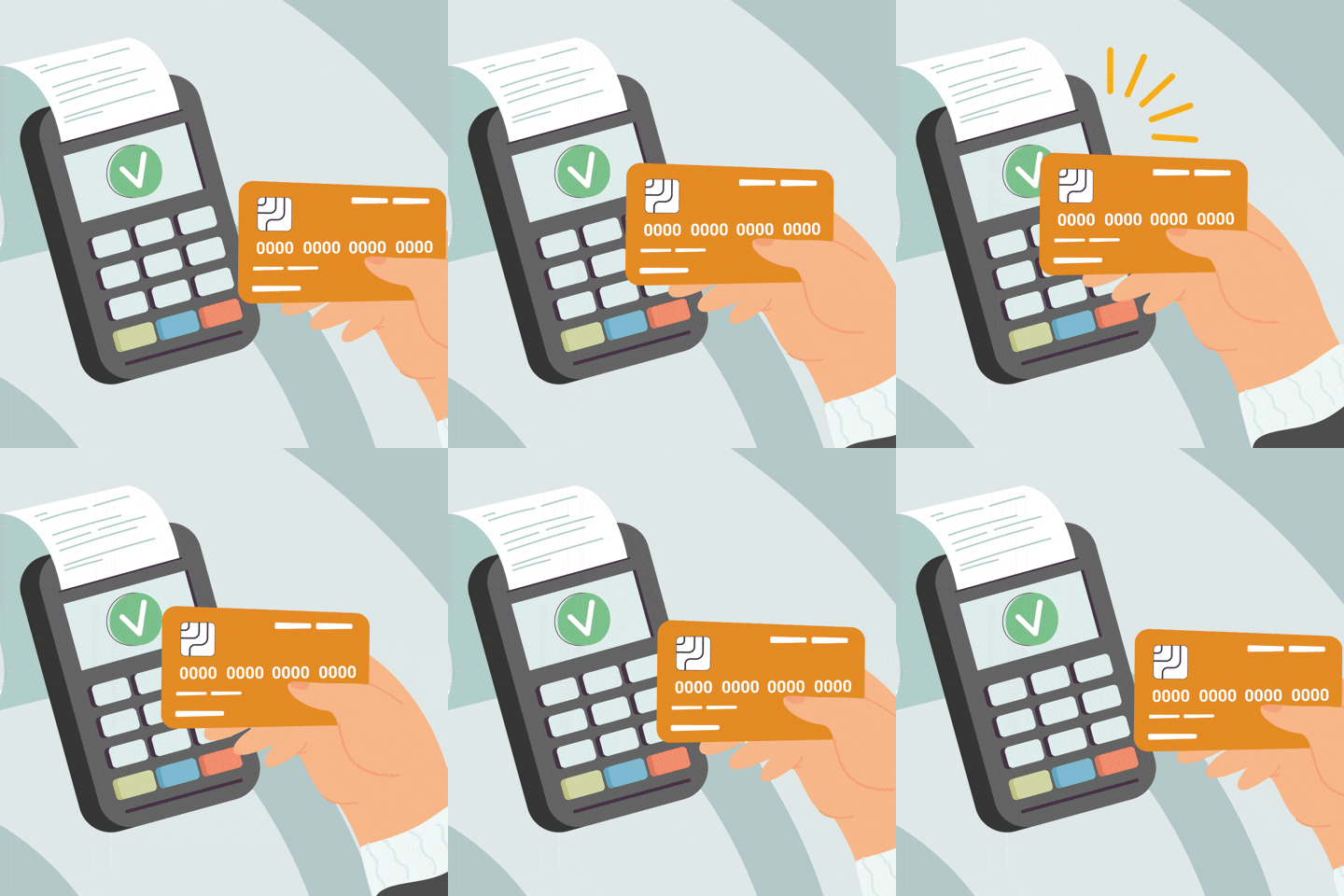
Pay: Complete payment so validation can begin.
Final Validation: Receive the validated certificates by email and provide them to the consignee and transit operator.
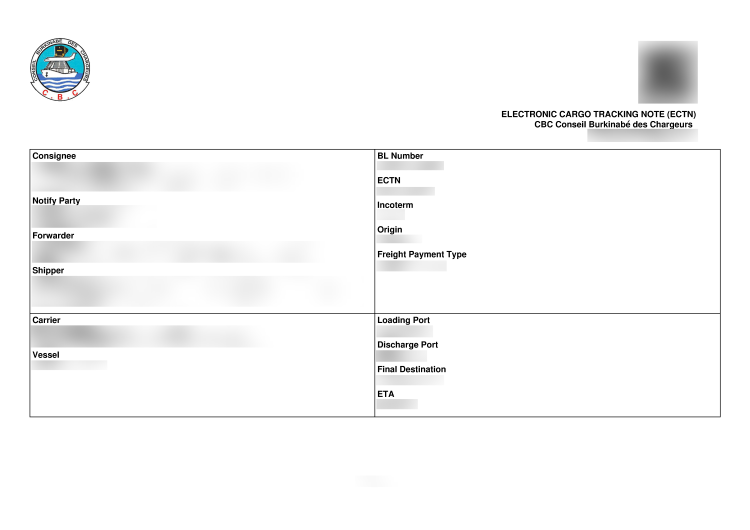
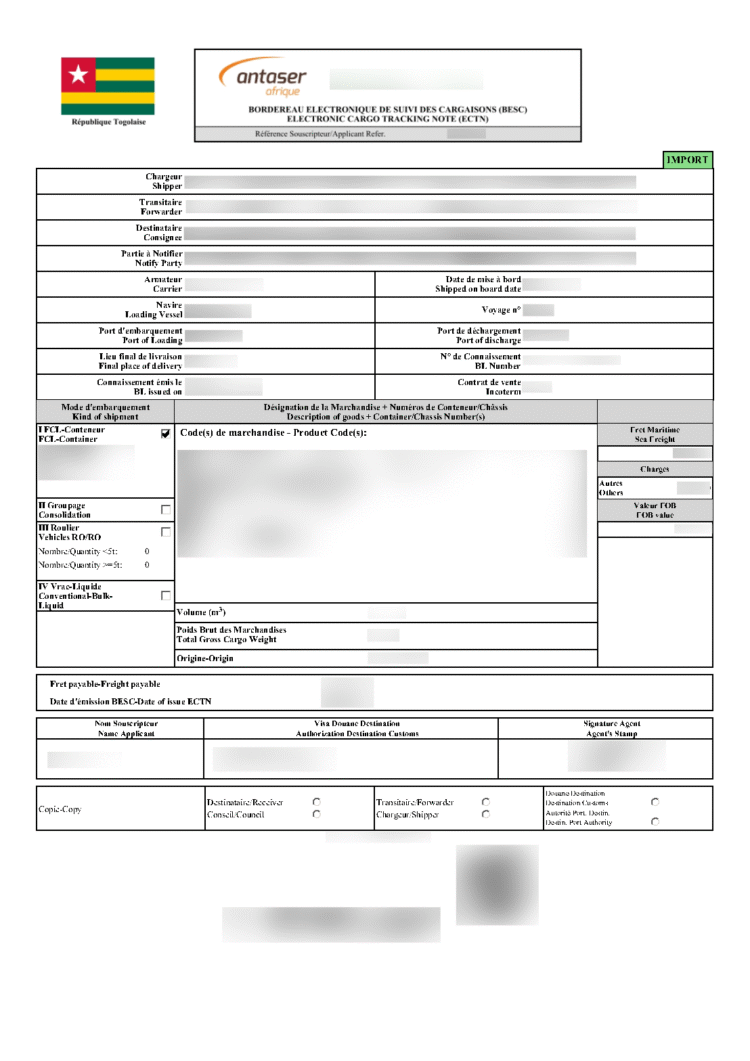
Keep the final certificates, updated bill of lading and supporting invoices together. The parties handling discharge in Lomé and onward transport should know that the cargo is moving under a Burkina Faso transit arrangement.
Common Problems on India–Togo–Burkina Faso Shipments
Watch for these issues before the vessel sails:
- Only one certificate requested: The forwarder obtains the Burkina Faso ECTN but overlooks the Togo transit requirement, or vice versa.
- Final destination missing: The bill of lading shows Lomé without clearly identifying the onward Burkina Faso movement.
- HS code omitted: The Burkina Faso commercial invoice does not show the HS code.
- Declaration mismatch: Weight or statistical value on the Indian export declaration differs from the BL or commercial invoice.
- BL updated too late: The carrier is asked to insert the ECTN reference after document changes have been restricted.
- Draft approved without a full check: A wrong vessel, container number or consignee address is discovered after validation has started.
These checks are easier to complete before departure from India than after the vessel is close to Lomé.
Frequently Asked Questions
Does a Burkina Faso shipment through Togo need both certificates?
Yes. The Burkina Faso ECTN applies because Burkina Faso is the final destination. The Togo ECTN/BESC also applies because the ocean cargo discharges in Togo before moving onward.
Can the applications begin with a draft bill of lading?
Yes. The initial drafts can be prepared from the bill of lading. The remaining required documents and the properly updated final BL must be supplied before final validation.
Does loading in India change the ECTN requirement?
No. The certificate requirements are determined by the discharge and final-destination rules. The Indian exporter or freight forwarder still needs to supply accurate export and shipping documents.
Need help coordinating both filings? Contact AfricaCTN about your Burkina Faso ECTN.
Found this article helpful? Add AfricaCTN as a preferred source on Google to see more AfricaCTN content in Top Stories, AI Mode and AI Overviews.
