 Angola
 Benin
Benin Burundi
 DR Congo
 Guinea Bissau
 Liberia
 Niger
Niger Togo
TogoSouth African exporters shipping cargo to Chad must arrange a Chad Electronic Cargo Tracking Note before the vessel departs.
The Chad ECTN, also called the Chad BESC, records the shipment details required for customs clearance at the final destination. It should be handled while the cargo is still being prepared in South Africa, not after the shipment is already approaching the destination.
Send the bill of lading, commercial invoice and freight invoice to AfricaCTN as soon as they are available. The shipment information must be complete and consistent before final validation.
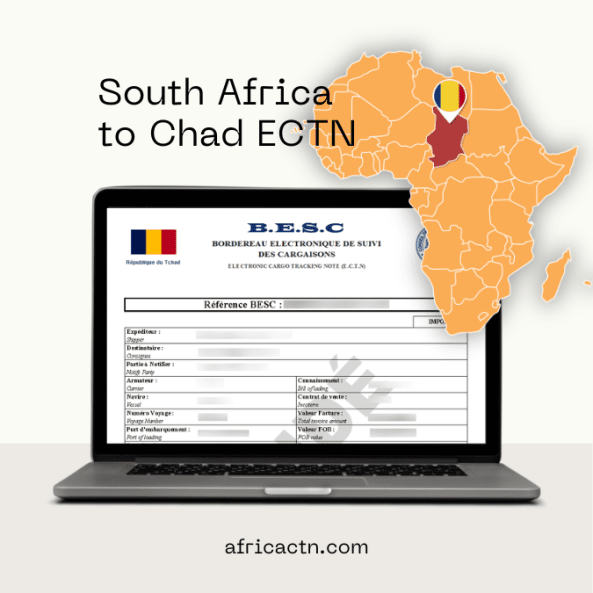
The Chad ECTN Requirement
The Chad ECTN applies to cargo shipped with Chad as the final destination.
Because Chad is landlocked, the bill of lading may show an overseas discharge port together with an inland destination in Chad. Both details must be entered correctly in the ECTN application.
The shipper or freight forwarder normally starts the application and provides the shipping documents. After validation, the final certificate should be sent to the importer or consignee for use during customs clearance.
A draft ECTN is not the final certificate. The draft must be checked, approved and paid before AfricaCTN can complete the validation process.
Documents to Send from South Africa
The standard Chad ECTN application requires the following documents:
- Bill of Lading: Send the latest available copy showing the shipper, consignee, notify party, cargo, vessel, ports, weight and container details.
- Commercial Invoice: The invoice should show the cargo description, quantity, value, buyer, seller and agreed Incoterm.
- Freight Invoice: Send this separately when the freight amount is not included on the commercial invoice.
The documents should be signed, stamped and dated where required.
AfricaCTN can begin reviewing the file using the latest bill of lading available. When the carrier later issues a revised copy, send it before approving the draft so the certificate reflects the final shipment details.
More information about shipping documents and application requirements is available in the AfricaCTN Knowledge Base.
Check the Shipment Details Carefully
Most Chad ECTN delays are caused by information that is missing or does not match across the documents.
Before approving the draft, check:
- Shipper and consignee names
- South African port of loading
- Ocean discharge port
- Chad as the final destination
- Vessel and voyage details
- Bill of lading number
- Container numbers and sizes
- Cargo description
- Package quantity
- Gross weight
- Commercial value
- Freight value
- Incoterm
The cargo description should be clear and consistent. A general description such as “goods,” “equipment” or “spares” may not provide enough detail for the application.
The weight on the commercial invoice and bill of lading should also agree. When the carrier changes the weight, container information or route, send the updated document to AfricaCTN immediately.
Do not approve a draft containing information that you already know will change. Corrections are easier to handle before final validation.
How to Apply for the Chad ECTN
The application follows five main steps.
- Submit the Documents: Send the bill of lading, commercial invoice and freight invoice to AfricaCTN by email or through the application portal.
- Receive the Draft and Invoice: AfricaCTN reviews the documents and prepares the draft Chad ECTN together with the service invoice.
- Review the Draft: Check the shipper, consignee, vessel, ports, cargo, weight, value and container information. Request corrections before approval when anything is wrong.
- Approve and Pay: Approve the draft after all shipment details have been confirmed. Complete payment so the application can proceed to final validation.
- Receive the Validated ECTN: AfricaCTN sends the final validated certificate electronically. Provide it to the importer or consignee for customs clearance in Chad.
Submitting the documents does not mean the application is complete. Draft approval and payment are both required before the certificate can be submitted for final validation.
Complete Validation Before Vessel Arrival
The Chad ECTN must be validated before the vessel arrives.
South African exporters should submit their documents three to five business days before the deadline. This gives AfricaCTN time to check the file, prepare the draft and correct any document differences.
Do not leave the application until the cargo has already sailed. A late submission can place the importer in a difficult position and may cause delays, additional handling and customs problems at the destination.
When departure is close, send the available documents immediately. AfricaCTN can review the file and tell you which information is still needed.
Common Problems to Avoid
A few checks before submission can prevent most application delays.
- Incorrect final destination: Chad must be shown correctly in the shipment information.
- Missing freight value: Send a freight invoice when the amount is not included on the commercial invoice.
- Different cargo descriptions: Use consistent wording across the bill of lading and commercial invoice.
- Weight differences: Confirm that the gross weight agrees across the supporting documents.
- Outdated bill of lading: Send the latest carrier copy before approving the draft.
- Unreported route changes: Inform AfricaCTN when the carrier changes the vessel, voyage or discharge port.
- Early draft approval: Do not approve the certificate while known changes are still pending.
A common issue we see is that the exporter approves the draft and then sends a revised bill of lading afterwards. Check with the carrier first when final vessel or routing information is still outstanding.
What the Importer Needs
The importer or consignee should receive the final validated Chad ECTN before customs clearance begins.
Send the importer the final certificate rather than the unapproved draft. The validation number and shipment information should match the documents presented for clearance.
The exporter, freight forwarder and importer should also use the same cargo description and shipment references. Differences between the ECTN, bill of lading and commercial invoice can create questions during document checks.
Start the Chad ECTN Early
For South African exports to Chad, the best approach is simple: send the documents early, check the draft carefully and complete validation before vessel departure.
Do not wait for every minor carrier update before opening the application. Send the available bill of lading and invoice first, then provide revised information before approving the draft.
Need help with your shipment? Contact AfricaCTN for your Chad ECTN.
Found this article helpful? Add AfricaCTN as a preferred source on Google to see more AfricaCTN content in Top Stories, AI Mode and AI Overviews.
