 Angola
 Burundi
 DR Congo
 Guinea Bissau
 Liberia
 Niger
Niger Togo
TogoThe ECTN certificate is an electronic cargo tracking note issued by AfricaCTN and it is mandatory to obtain one when shipping to 25+ African countries. This article will cover the purpose behind this document, the process and requirements as well as the timing of the ECTN validation.
What is an ECTN Document?
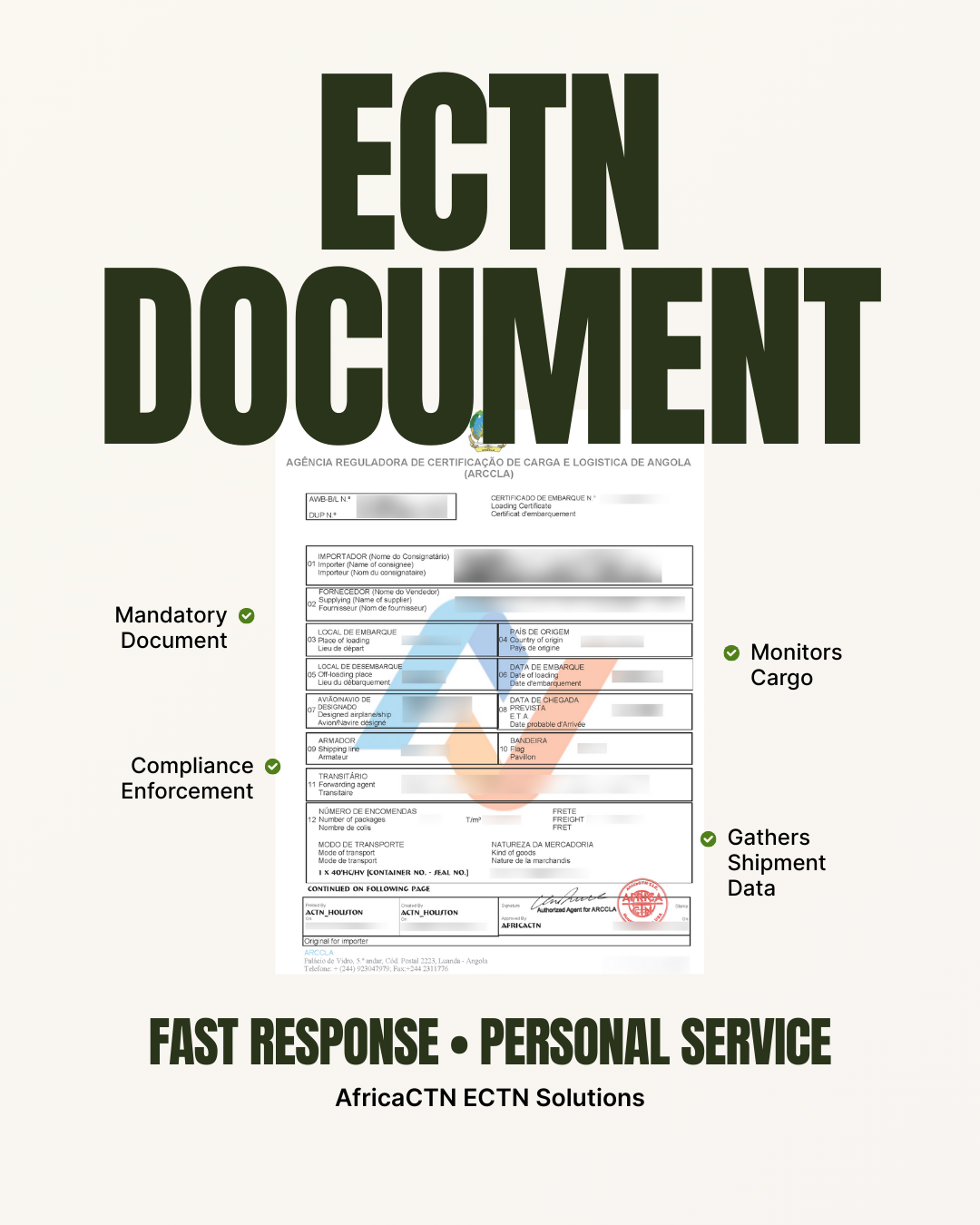
The ECTN is a waiver certificate that provides the customs authorities with critical information about your shipment prior to vessel arrival at the destination port. It can also be known as the BESC (bordereau électronique de suivi de cargaison), BSC, BIETC, CTN Certificate, CNCA or FERI.
The ECTN is a mandatory document for all of the following countries:
Angola, Benin, Burkina Faso, Burundi, Cameroon, Central African Republic, Chad, Equatorial Guinea, Gabon, Democratic Republic of the Congo, Djibouti, Ghana, Guinea Bissau, Ivory Coast, Liberia, Madagascar, Mali, Niger, Republic of Congo, Republic of Guinea, Senegal, Sierra Leone, Somalia, South Sudan, Sudan, Togo, Yemen
It contains information about the:
- Shipper and Consignee: Name, address and contact details
- Goods: Weight, volume, goods value and HS codes
- Voyage Information: Loading and discharge port, vessel name and voyage number
This information is found via the required documents:
- Bill of lading
- Commercial invoice
- Freight invoice
- Customs declaration
- Optional: Packing list, certificate of origin
What is the ECTN Number and Why It Matters
The ECTN number is the unique reference number generated upon issuance of a valid ECTN by an authorized agent. Each destination country will have it’s own structure, the ECTN number is assigned to each bill of lading and cannot be reused. This number will aid in a smooth customs clearance process once the vessel arrives.
If your shipment is missing an ECTN number or if it is found to be incorrect, the importer will face fines and delays at the destination port.
Why the ECTN Document is Required for Shipping to Africa
Monitor Cargo: It helps the port authorities have a better understanding of what shipments are currently in transit to their country, and the goods being imported
Compliance Enforcement: Each destination country has its own import regulations, the ECTN helps ensure all shipments meet the laws and regulations
Gather Data: The ECTN is critical in helping each African country gather data about the goods being imported into the country
How to Apply for an ECTN Document
Firstly, the shipper or freight forwarder must gather the bill of lading, commercial invoice and freight invoice to begin the ECTN application process.
Submit: Send all the necessary documents to AfricaCTN via email or online
Draft & Invoice: Receive the draft ECTN and invoice for your shipment
Approve: Check and confirm all details on the draft ECTN
Pay: Make payment of the invoice so validation can begin
Validation: Receive the final validated ECTN ready for customs clearance
Summary
The ECTN is mandatory when shipping to 25+ African countries. The application process is fast and simple when working with AfricaCTN. If you have questions about your shipment to Africa, please check with AfricaCTN about the required documents and ECTN requirement to avoid delays and penalties at the destination port.
