 Angola
 Burundi
 DR Congo
 Guinea Bissau
 Liberia
 Niger
Niger Togo
TogoThe BESC Certificate is a mandatory shipping document required for all cargo shipments going to more than 25 African countries. AfricaCTN is an authorized agent for many countries requiring the BESC. Our team issues your BESC Certificate at the country of origin to prevent delays at the destination port for the importer.
The BESC / ECTN Certificate contains detailed information about the shipper, freight forwarder, and consignee / importer. Additionally, it provides a unique BESC number for customs authorities to track your shipment.
- CTN abbreviation: French translation of Electronic Cargo Tracking Note
- Mandatory: mandatory document for importing into 25+ African countries
- Required documents: bill of lading, commercial invoice, freight invoice

How to Get a BESC Certificate?
Below is the breakdown of the hassle-free application process and BESC requirements:
- Submit the Required Documents: Bill of lading, commercial invoice, freight invoice, customs declaration and additional documents
- Receive Draft & Invoice: AfricaCTN issues the draft BESC and invoice in just a few hours
- Approve the Draft: Check and confirm all details on the draft BESC
- Pay the Invoice: Pay the invoice so validation can begin
- Final Validation: Usually within 24-48 hours the final validated certificate will be released.
Other Names for BESC Certificate
- ECTN: Electronic Cargo Tracking Note
- BSC: Bordereau de Suivi des Cargaisons
- CTN: Cargo Tracking Note
- BIETC: Bordereau d’Identification Électronique de Traçabilité des Cargaisons
- ACD: Advance Cargo Declaration
- FERI: Fiche Électronique des Renseignements a l’Importation
- CNCA: Conselho Nacional de Carregadores de Angola
Requirements by Country
The following countries require the BESC certificate: Angola, Cotonou Benin, Burkina Faso, Burundi, Cameroon, Central African Republic, Chad, Equatorial Guinea, Gabon, Democratic Republic of the Congo, Djibouti, Guinea Bissau, Ivory Coast, Liberia, Madagascar, Mali, Niger, Republic of Congo, Republic of Guinea, Senegal, Sierra Leone, Somalia, South Sudan, Sudan, Togo, Yemen
Why is the BESC Mandatory?
The BESC is an essential document for customs clearance and port security in the destination country. It contains information about the freight forwarder, shipper, importer and the importing goods being shipped.
AfricaCTN ensures your shipment meets all import regulations and makes sure there are no discrepancies between your required documents.
Contact us on Whatsapp for rapid responses.
What Does the BESC Certificate Look Like?
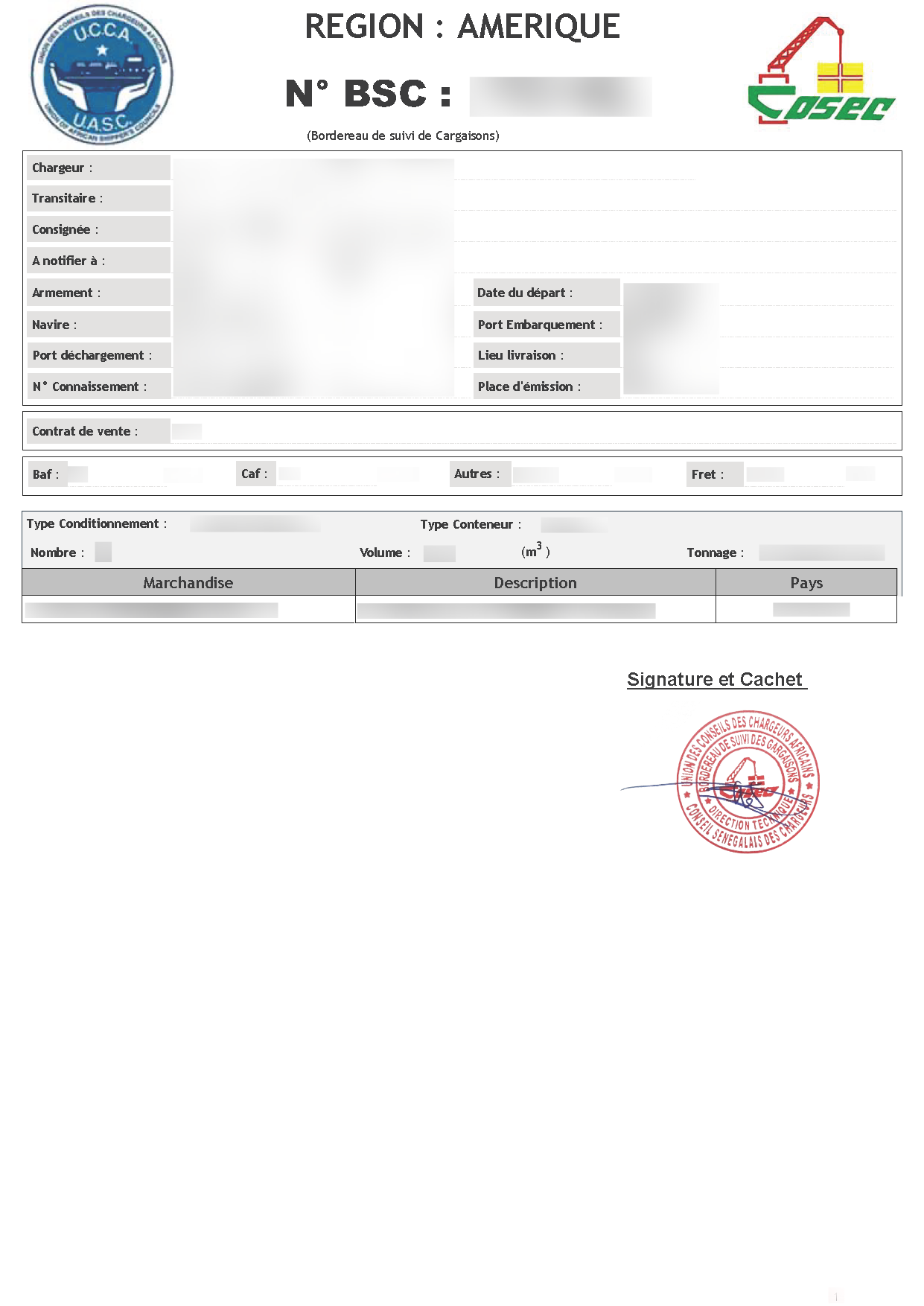
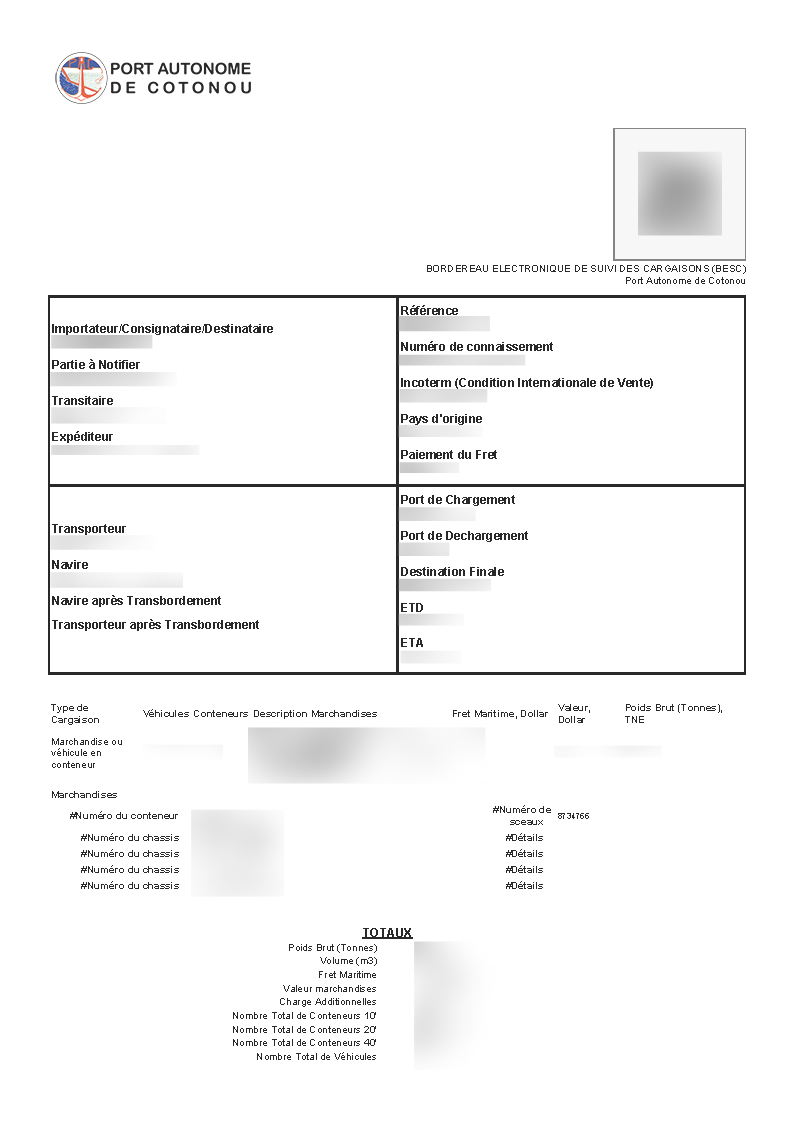
Each destination country has their own regulatory requirements and BESC Certificate. All African countries BESC will contain information about the shipper, freight forwarders, consignee, goods, vessel, voyage number etc.
The below examples are a Senegal BSC Certificate (first) and Benin BESC Certificate (second).
Summary
The BESC Certificate is a mandatory document for all shipments with a final destination in more than 25 African countries. To get one, you submit your required documents to AfricaCTN, receive a draft and invoice, approve the draft, pay the invoice and receive your validated certificate.
Frequently Asked Questions
What is BESC in Shipping?
BESC is an abbreviation of Bordereau électronique de Suivi de Cargaison, which is the French translation of Electronic Cargo Tracking Note (ECTN)
How to Apply for BESC Certificate?
- Submit the required documents to AfricaCTN
- Receive the draft BESC and invoice
- Approve the draft
- Pay the invoice
- Receive the final validated BESC certificate
What is a BESC Certificate?
A BESC is a mandatory shipping document required for all cargo shipments going to more than 24 African countries. It contains detailed information about the shipment and provides a unique tracking number for customs and port authorities.
How it BESC Used?
It is used to track goods, monitor imports, ensure smooth customs clearance and prevent delays in the destination port.
What Happens if You Don’t Get a BESC Certificate?
Your shipment must have all the necessary documents along with the validated BESC waiver before the validation deadline (see your destination countries validation deadline here). If not, this can cause delays in logistics operations the destination port. Not having a BESC can result in heavy fines and penalties, sometimes more than 200% the cost of the waiver.
